
SWIR-Zeilenkamera: Warum SWIR für die industrielle Inspektion nutzen?
Wenn sichtbares Licht nicht ausreicht, bietet SWIR-Zeilenbildgebung eine weitere Möglichkeit, Materialien, die kontinuierlich durch industrielle Produktionslinien bewegt werden, zu sehen und zu inspizieren.
In der modernen Machine Vision bestehen viele Inspektionsherausforderungen nicht mehr nur darin, Form, Farbe oder Oberflächendefekte einfach zu erkennen. Die eigentliche Herausforderung ist oft:
Hier wird die Kurzwellen-Infrarot- (SWIR-) Bildgebung wertvoll. In Kombination mit Zeilenscan-Technologie bietet SWIR eine leistungsfähige Lösung für kontinuierlich bewegte Materialien, Hochgeschwindigkeitsproduktion, Sortierung, Web-Inspektion und Materialanalyse.
Warum SWIR statt sichtbarem Licht nutzen?
Konventionelle RGB-Kameras eignen sich hervorragend zur Erkennung von Farbe, Form, Textur, Oberflächenaussehen und geometrischen Defekten. Allerdings können einige Materialien im sichtbaren Licht fast identisch aussehen, während sie im SWIR-Bereich sehr unterschiedliche Reaktionen zeigen.
Sichtbare / RGB-Bildgebung
Erfasst primär das sichtbare Aussehen wie Farbe, Form, Textur und Oberflächendefekte.
SWIR-Bildgebung
Liefert zusätzliche Informationen zu Materialzusammensetzung, Feuchtigkeit, Beschichtungen, Kontamination und spektraler Reaktion.

Warum eine Zeilenkamera wählen?
SWIR bestimmt welche Wellenlängen detektiert werden. Zeilenscan bestimmt wie kontinuierlich bewegte Materialien inspiziert werden.
Im Gegensatz zu einer Flächenscankamera erfasst eine Zeilenkamera jeweils eine Zeile. Wenn sich das Objekt durch den Bildbereich bewegt, werden diese einzelnen Zeilen zu einem vollständigen Bild kombiniert.
Diese Architektur ist besonders geeignet für Förderbandinspektion, kontinuierliche Materialsortierung, Roll-to-Roll-Produktion, Web-Inspektion, Lebensmittelverarbeitung, Recycling, Solarzellenherstellung und Halbleiterinspektion.
Warum SWIR + Zeilenscan kombinieren?
SWIR
Liefert zusätzliche spektrale Informationen zur Unterscheidung von Materialien, Feuchtigkeit, Beschichtungen, Kontamination und anderen Merkmalen jenseits der sichtbaren Bildgebung.
Zeilenscan
Ermöglicht die kontinuierliche Bildaufnahme für bewegte Materialien und Produktionslinien mit hoher Durchsatzleistung.
Wichtige SWIR-Zeilenscan-Anwendungen
SWIR-Zeilenbildgebung ist nicht auf eine Branche beschränkt. Ihr Hauptvorteil besteht darin, zusätzliche Materialinformationen bereitzustellen, wenn die sichtbare Bildgebung an ihre Grenzen stößt.

Lebensmittel & Landwirtschaftliche Sortierung
SWIR kann zusätzliche Informationen zu Feuchtigkeit, Zusammensetzung, Kontamination und Fremdstoffen während der kontinuierlichen Inspektion von Lebensmitteln und landwirtschaftlichen Produkten liefern.

Recycling & Materialsortierung
SWIR kann helfen, Materialien zu unterscheiden, die ein ähnliches sichtbares Aussehen aufweisen, und unterstützt so die automatisierte Materialklassifizierung mit hoher Durchsatzleistung.

Halbleiter & Elektronik
SWIR kann die sichtbare Inspektion für Wafer, Dies, Bonding, Ausrichtung und ausgewählte Inspektionsanwendungen im Zusammenhang mit Unterflächen ergänzen.

Solarzelle & Photovoltaik
SWIR-Zeilenbildgebung kann die kontinuierliche Inspektion von photovoltaischen Wafern, Zellen, Oberflächen und Produktionsprozessen unterstützen.

Feuchtigkeitsdetektion
Materialien mit unterschiedlichen Feuchtigkeitsbedingungen können unterschiedliche SWIR-Reaktionen zeigen, was Möglichkeiten für berührungslose Inspektion schafft.

Folie & Beschichtungsinspektion
SWIR kann zusätzlichen Kontrast für Folien, Beschichtungen, Klebstoffe, Kontamination und Unterschiede zwischen Materialschichten liefern.
Contrastech SWIR-Zeilenkamera-Familie
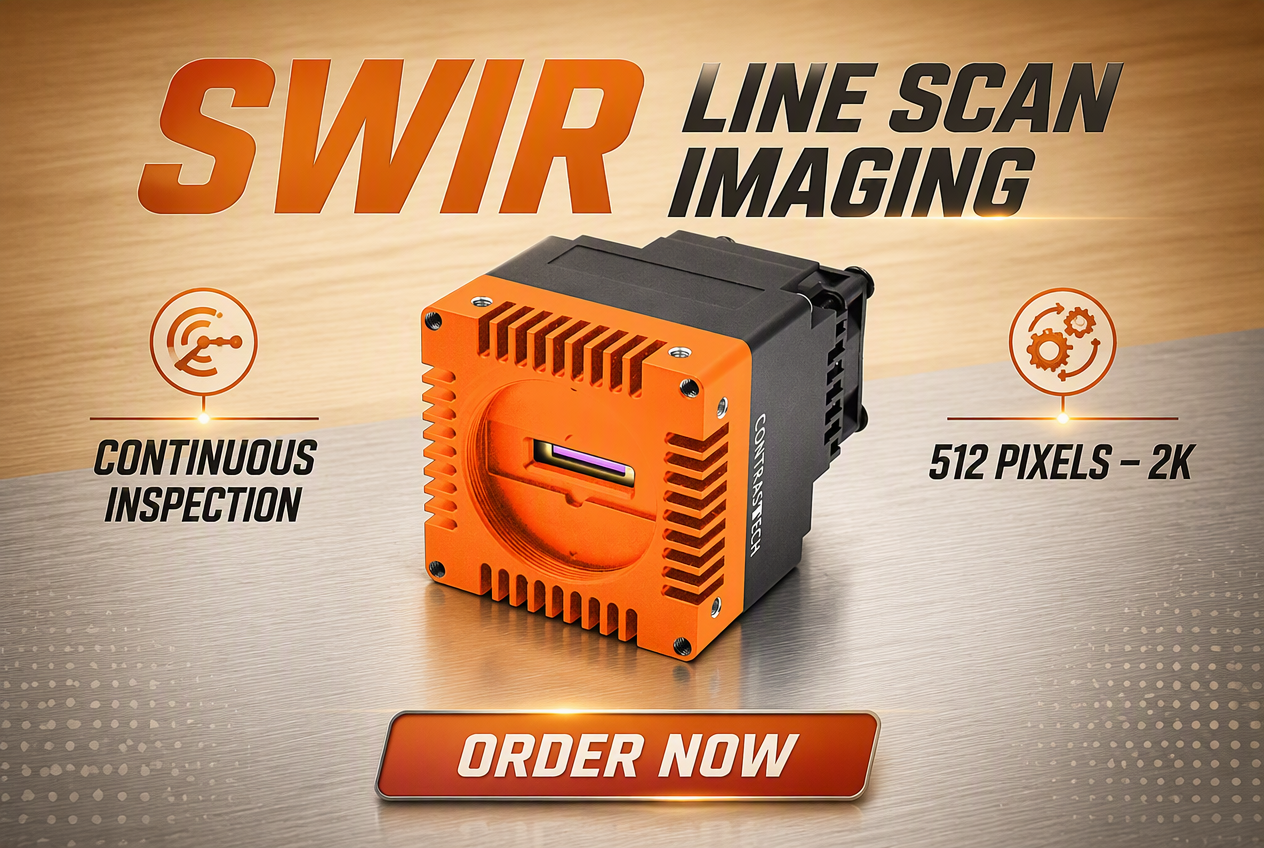
Contrastech bietet drei Kern-SWIR-Zeilenscan-Konfigurationen, die 512 Pixel bis 2K Pixel abdecken, alle für den SWIR-Bereich von 950–1700 nm konzipiert.
Eine praktische Konfiguration für Standardinspektion, Sortierung und anwendungsbezogene Sensitivität.
Eine ausgewogene Lösung für allgemeine industrielle SWIR-Inspektion und Materialanalyse.
Entwickelt für höhere räumliche Abtastung und detailliertere Produktionslinieninspektion.
Die Kamerauswahl sollte auf Inspektionsbreite, Arbeitsabstand, Objektspeed, minimaler Defektgröße, erforderlicher räumlicher Auflösung und Systemschnittstelle basieren.
Welche SWIR-Zeilenscan-Auflösung benötigen Sie?
| Modell | Auflösung | Bildrate | Spektralbereich | Typische Positionierung |
|---|---|---|---|---|
| iBt-SW05K | 512 x 2 | 29.4kHz | 950–1700 nm | Standardinspektion / Sortierung |
| iBt-SW1K | 1024 x 1 |
29.4kHz 40kHz |
950–1700 nm | Allgemeine industrielle Inspektion |
| iBt-SW2K |
2048 x1 2560 x 1 |
40kHz 196kHz |
950–1700 nm | Inspektion mit höherer Auflösung |
SWIR-Kamera + SWIR-Objektiv: Die vollständige optische Lösung
Eine SWIR-Kamera allein erstellt kein vollständiges Bildgebungssystem. Das Objektiv muss ebenfalls für den erforderlichen SWIR-Wellenlängenbereich geeignet sein.
Kamera
Auflösung, Empfindlichkeit, Zeilenrate, Schnittstelle und spektrale Reaktion.
SWIR-Objektiv
Spektrale Transmission, Brennweite, Sichtfeld, Arbeitsabstand und optische Auflösung.
SWIR-Beleuchtung
Wellenlänge, optische Leistung, Beleuchtungsgeometrie und Gleichmäßigkeit über den Inspektionsbereich.
Bewegung & Verarbeitung
Objektspeed, Enkodersynchronisation, Bildaufnahme und Inspektionsalgorithmen.
RGB + SWIR: Ein vollständigeres Vision-System
SWIR ersetzt nicht unbedingt RGB. In vielen industriellen Anwendungen ist die beste Lösung, beide Bildgebungstechnologien zu kombinieren.
RGB
Farbe + Form + Textur + Oberflächenaussehen
Ideal für konventionelle Oberflächen- und geometrische Inspektion.
SWIR
Material + Feuchtigkeit + Beschichtung + Spektrale Reaktion
Fügt Informationen jenseits des sichtbaren Spektrums hinzu.
Wie man eine SWIR-Zeilenscan-Lösung auswählt
Definieren Sie vor der Kamerauswahl zunächst die Inspektionsanwendung.
Was wird inspiziert?
Welche Informationen fehlen bei RGB?
Wie schnell bewegt sich das Objekt?
Welches Sichtfeld ist erforderlich?
Welche räumliche Auflösung ist erforderlich?
Wie weit ist die Kamera vom Objekt entfernt?
Welche SWIR-Lichtquelle ist verfügbar?
Welche Erfassungsschnittstelle ist erforderlich?

Sichtbares Licht mit SWIR überwinden
Wenn sichtbare Bildgebung ausreicht, bleibt RGB eine ausgezeichnete Wahl. Aber wenn Materialien ähnlich aussehen, Feuchtigkeit detektiert werden muss, Beschichtungen inspiziert werden müssen oder Produktionslinien eine kontinuierliche Materialanalyse erfordern, kann SWIR eine weitere Ebene an Informationen liefern.
Mit SWIR-Zeilenkameras im Bereich 950–1700 nm, dedizierter SWIR-Optik und geeigneter Beleuchtung bietet Contrastech flexible Lösungen für industrielle Machine-Vision-Anwendungen, bei denen sichtbare Bildgebung nicht mehr ausreicht.
Contrastech SWIR-Kameras entdeckenWeitere SWIR-Anwendungen entdecken
Lebensmittel & Landwirtschaftliche Sortierung
Erfahren Sie, wie SWIR-Zeilenbildgebung helfen kann, Unterschiede in Material, Feuchtigkeit und Kontamination zu identifizieren.
Mehr lesen →Recycling & Materialklassifizierung
SWIR-Anwendungen für die automatisierte Materialsortierung entdecken.
Mehr lesen →Halbleiterinspektion
Entdecken Sie, wie SWIR die sichtbare Inspektion in der Halbleiterfertigung ergänzen kann.
Mehr lesen →Solarzelleninspektion
Informieren Sie sich über SWIR-Zeilenbildgebung für die photovoltaische Produktion und Inspektion.
Mehr lesen →SWIR-Feuchtigkeitsdetektion
Verstehen Sie, warum SWIR feuchtigkeitsbedingte Unterschiede aufdecken kann, die für RGB-Kameras unsichtbar sind.
Mehr lesen →Wie man ein SWIR-Objektiv auswählt
Erfahren Sie, wie Wellenlänge, Brennweite, Arbeitsabstand und Sichtfeld die SWIR-Bildgebung beeinflussen.
Mehr lesen →